Maldives tradition modern law: How to guide island life
The Maldives represents a complex intersection where historical island values and modern state structures meet. To understand this nation, one must look at how its democratic processes and international affiliations balance local traditions with global responsibilities.
This guide explores the Maldives' transition from a sultanate to a republic and its current political landscape. Travelers and students will learn about the nation's significant role in international organizations and the specific environmental challenges facing its low-lying islands. 1. The nation's shift to a republic via a massive 1968 referendum. 2. Political leadership and the 2023 presidential election results. 3. International diplomatic roles and membership in major organizations. * Environmental vulnerabilities and the impact of rising sea levels.
How did the Maldives transition to a republic?
A voter places a hand on a ballot in a local village, contemplating the future of their island sovereignty. This historical shift occurred on 15 March 1968 through a national referendum regarding the fundamental structure of the government.
The Maldives underwent a profound transformation when the people decided on their political identity. According to Wikipedia, 93.34% of those taking part in the 1968 referendum voted in favor of establishing a republic.
This decisive mandate moved the country away from its previous governance toward the modern system used today.
What defines the current political landscape? Maldives tradition modern law
A candidate addresses a crowded podium during a heated campaign season under the tropical sun. The Maldives maintains a vibrant democratic process, evidenced by recent high-stakes leadership contests.
The political structure is shaped by competitive elections that determine the direction of the country.
In the 2023 election, People's National Congress (PNC) candidate Mohamed Muizzu won the second-round runoff of the Maldives presidential election, beating incumbent president, Ibrahim Solih, with 54% of the vote.
This outcome reflects the active participation of the citizenry in shaping their modern administration.
What international roles does the Maldives hold?
A diplomat signs a treaty in a large assembly hall, representing the interests of a small island nation. The Maldives maintains a presence in several major global and regional entities to ensure its voice is heard.
Since 1996, the Maldives has been the official progress monitor of the Indian Ocean Commission, according to the Indian Ocean Commission. According to World Bank data, the Maldives recorded international tourist arrivals of 555,000 in 2020.
The country is a member of the United Nations, the Commonwealth of Nations, the Organisation of Islamic Cooperation, and the Non-Aligned Movement. Additionally, it serves as a Dialogue Partner of the Shanghai Cooperation Organisation.
Furthermore, Maldives is a founding member of the South Asian Association for Regional Cooperation (SAARC).
How does the nation manage its environment?
A researcher collects water samples near a coral reef to check for temperature changes. The Maldives faces extreme vulnerability due to its unique geography and the threat of rising oceans.
The Environmental Protection Agency notes that 31 protected areas are administered by the Ministry of Climate Change, Environment and Energy and the Environmental Protection Agency (EPA) of Maldives.
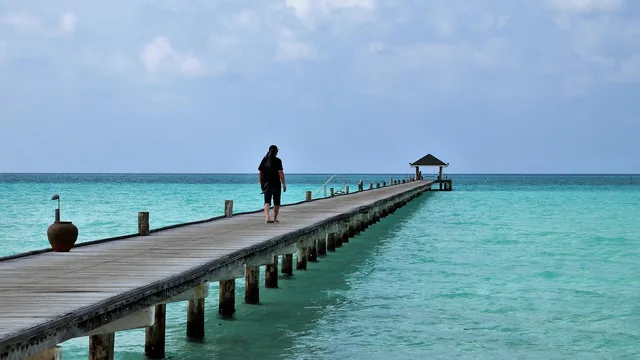
The Maldives is the lowest-lying country in the world, and it is particularly at risk to sea level rise. According to Wikipedia, more than 80% of the Maldives' 1,190 coral islands sit less than 1 meter above sea level.
This physical reality dictates much of the nation's environmental policy and conservation efforts.
How is the local geography structured?
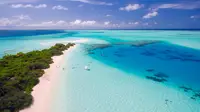
A driver navigates a narrow strip of asphalt that cuts through the turquoise water. The physical layout of the islands varies significantly between different atolls.
In Addu Atoll, the westernmost islands are connected by roads over the reef (collectively called Link Road), and the total length of the road is 14 km (9 mi). This specific infrastructure allows for easier movement between islands in that specific region.
How does the climate affect daily life?
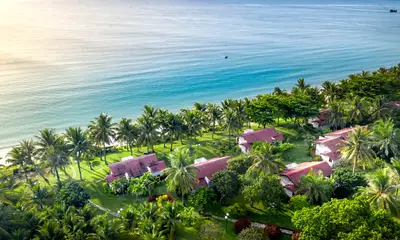
A resident adjusts a shade to block the intense midday heat. The weather patterns in the Maldives are characterized by consistent warmth and high humidity.
The average high temperature is 31.5 degrees Celsius and the average low temperature is 26.4 degrees Celsius. These temperatures define the lifestyle and the ecological needs of the islands.
I remember observing how the heat influences the rhythm of daily activity during my time studying these patterns.
| Metric | Value |
|---|---|
| 1968 Referendum Vote | 93.34% |
| 2023 Election Win | 54% |
To understand the Maldives, one must follow these steps: 1. Examine the historical referendum results to understand the republican foundation. 2. Review recent election data to track current political trends. 3. Analyze international memberships to see the nation's diplomatic reach. 4.
Check the environmental data to grasp the risks of sea level rise.
The study of the Maldives is limited to the information provided regarding its political, environmental, and geographical data.
The subject here is Maldives tradition modern law.
The same subject is also called Maldives culture and system.
The same subject is also called Old customs new governance.
The same subject is also called Maldives heritage and rules.
This part also covers Balancing island festivals and courts.
This part also covers Historical roots of modern administration.
This part also covers Understanding local customs and laws.
Balancing island festivals and courts
Related
- What is the role of the Football Association of Maldives?
- Maldives national team history: Guide to 12 months past
What are the specific risks to the islands?
Rising sea levels pose a direct threat to the Maldives because of its low elevation. The fact that 80% of the 1,190 coral islands sit less than 1 meter above sea level creates a condition of extreme vulnerability.
This geographic reality means that the nation is the lowest-lying country in the world.
How do voters influence the political landscape?
A voter participates in the democratic process through specific electoral mechanisms. For instance, the 2023 presidential election required a second-round runoff to determine the winner. In this specific case, Mohamed Muizzu secured 54% of the vote to defeat the incumbent president, Ibrahim Solih.
- Participate in the national referendum to decide the government structure. 2. Engage in competitive elections to determine the current political leadership. 3. Monitor the second-round runoff if a candidate fails to win a majority initially.


Comments 0